Swaroop King

Swaroop King
Title Image

Thursday, 30 July 2015

Great Movie: 13 Conversations About One Thing

It is very easy to make a movie about happiness. It is very tempting to sermonize to take life a moment at a time and take nothing for granted. Not that such an approach or such an intention is to be dismissed off as just dumbing it down for the audience or being afraid to be realistic. We often see film makers start with characters who are radical, but we can see them disappointingly shy away from letting their characters' lives take turns that would have been inevitable for them if they existed in a real world. They redeem these characters from themselves and their demons for a happy ending or to endear them to the audience. Take "As good as it gets" for example. In that movie, Jack Nicholson is a man who in real life can never have a relationship, thanks to the 765320462 insults he manages to throw at anyone he meets, in just a couple of minutes. People like these, the victims of their own mentalities can never afford to have another person sympathize for them even if they themselves painfully try to not be themselves. But the audience love such transformations and miracles, and thats what tempts filmmakers to trade off their movie's reality for popular appeal. While critics might express their disappointment, people feel rewarded for the dose of assurance they get that hope wins and everything will be alright in life, anyway. Of-course I am sure that the cinematic-climax of "As good as it gets" is responsible for the public appeal and acceptance of an otherwise depressing film.

This is the reason why I liked, appreciated and fell in love with this film "13 Conversations about one thing". The theme of the movie is "Happiness", and the story (if it can be called a story) is about how happiness plays with humans. May be happiness has no intention of playing with our lives, but we are so hellbent on being happy all the time and dismiss off any other state of mind as being robbed off by life. "Happiness is not the norm" say some yogis, whose logic is that all the feelings including happiness, grief, sorrow, anger and sadness are more or less the ripples of the waves the activity of life creates (and thus they convince that crest follows trough). But man always prefers to be smiling, happy, successful, loved, warm and beautiful. And this expectation is what makes life so disappointing and confusing, given the way life presents itself as the time given to man to do what he wants to do. That's what this movie discusses.

We meet several characters in this film all of whom have one and only one obvious goal, happiness. We meet a lawyer in a bar( Matthew McConaughey) who celebrates his victory with booze and is in no mood to give "Luck" its due acknowledgement and even dismisses if off as a sorry excuse of losers. He argues with a pessimist that life is not as complicated as they say and that conscious actions and decisions govern the outcomes we enjoy or suffer, and nothing more or less than that. It is not very surprising to see someone who is enjoying the privilege of getting what they deserve from life, completely dismiss the impact of things that are not in an individual's control and yet manage to change his game. Ironically, he on his way home hits a girl and seriously injures her and presumes she is dead. He helplessly watches his own life being shred to pieces and is painfully made to observe the powerlessness of his decisions or the order that he presumes is in the world, to redeem him from the claws of fate. What does this imply? Nothing. That's why I liked this movie.

In another story, we come across a girl who tells her friend how she is saved from death and how that made her think that there is a reason why she is given a second chance. She talks about a vision she had when she was drowning, and it all sounds convincing to her till she gets hit by Matthew McConnaughey's car. Her life is pushed back to years and she cannot do anything about it, except to try in vain to find a "reason" behind this. What does it imply? Nothing. There are some other characters and events in this film that present different journeys and stories but no conclusions can be made from their stories.

There is no message conveyed here, no redemption arrived at, no meaning of life found out. What does this film portray? Reality. The way man cons himself to believe that it all makes sense in someway or the other. Good people suffer, and bad people prosper, and not much can one do to prevent it. People who are happy till then, will be turned upside down suddenly and lose so much. They might manage to crawl back to where they have been pushed away from but so many years will be blown off from their lives, and they do not stand there with any compensation except with a lesson that they presume life taught them. I never came across a man who made use of a "lesson" that life taught them, for any substantial achievement. I know an old man who is cheated by his friends and is taken advantage of. He used to tell me that life taught him never to trust anyone, but he never again had money enough to use that precaution, neither did he live long after that. The "lesson" that he thought life taught him, proved to be a lesson that could have benefited if had not been taught. In other words, not a lesson at all.

The movie presents the world around us, as it is. There are lucky people, who get parties from life. There are not so lucky people who are denied things but who work and manage to get what they are not given. And then there are unlucky people who try but not succeed. There are people from whom everything is taken away, just as they begin to appreciate it. There are people for whom it is impossible even to try. Yes, and a million other cases exist. Some guys believe that there is a higher consciousness sitting above the clouds that takes the responsibility of managing who should get what. And some comment that no such entity exists and that if it is true it should be despised for its sadism rather than being looked at with reverence.

Films like these might  be hard to digest for those who share "Life is Beautiful" wallpapers and "Keep Smiling" quotes on Facebook, but I saw very few films that came as close to the reality of life. The director chooses to capture the game rather than trying to drive it. Rather than telling fairy tales about happiness it just makes us look at life as we should. Not with reverence, or not with despise but with an acknowledgement of the sense that no matter how it is, our only option is to deal with it and carry forward. May be not all who watch this movie might agree with me. "You didn't get it, idiot" they might say. But whats important is, it makes us have our own conclusion, by not giving a conclusion. Long live great cinema.

Wednesday, 25 February 2015

GREAT FILM: THE SILENCE OF THE LAMBS

Agent Starling is a trainee at the FBI and her boss Jack Crawford gives her an assignment, to talk to Dr. Hannibal Lecter (nick named Hanniball-the-Cannibal) who has been serving life in a mental institution. A psychopath killer named Buffalo Bill is on the run in the city killing women and skinning them. And Crawford sends Starling to talk to Hannibal as he beliueves Hannibal might offer some insight into Buffalo Bill's psyche which might help them get closer to catching Bill.

Dr. Hannibal is not some mere psychopath. He was a psychiatrist, a very good one indeed and his love for the science to read people's minds is intense but not as intense as his taste for people's livers and kidneys taken raw out of their bodies and dripping with blood. He is primarily a cannibal who is aided with his wonderful ability to manipulate people's minds. The deep and dark areas of human mind are no secret to him. Just by talking to Agent Starling for five minutes, he tells her native place, her insecurities and hence  her repressions. He considers himself highly intellectual way above than the people around him. And he is right. While sending Starling to Hannibal, Crawford warns Starling not to reveal anything about her personal life to him. "Trust me, you don't want Hannibal inside your head" he says to her.

"Crawford sent a trainee to me?" Hannibal says. And why would the FBI boss send a trainee when he can send an expert in criminal psychology? Because they are no good to Hannibal, and all the previous attempts by the best of psychiatrists to analyse and hence conquer Hannibal are blown to pieces by Hannibal's mastery in psychiatry and his crude insults. Here is a man, who knows all the tricks. Crawford believes that this new  serial killer Buffalo Bill whom they are failing to trace can be unlocked only when they can gain some insight into his psyche, and the best person who can take them into the killer's mind is none other than this veteran cannibal genius.

Dr. Hannibal Lecter, who has never co operated with investigation so far, and who insults his investigators to the core and remains silent, chooses to talk to Starling. She approaches him, not with the confidence and arrogance of  an FBI agent but as a student who regards her master as a man of great understanding. When she initially greets Hannibal, we see in his wide open eyes an amusement. And he is happy to get a subject, with whose mind he can play. He entertains her because he sees no agenda behind her approach but a polite attempt to "dissect" him. Crawford knows that if he tells her the purpose even before she talks to Hannibal, he would not have talked to her. "He would have toyed with you and went to silence". Because what Hannibal wants is a subject, but not a situation where he is being subjected to basic level standard psychological examination. That's why Starling's  questionnaire disappoints him. " You think you can dissect me with this blunt little tool?" he asks her, looking at her questionnaire.

When she is desperate to catch Buffalo Bill and seeks Hannibal's help, he doesn't simply offer her a visual of Bill's head charitably, but he asks her to take him to her past. He asks her to tell her about her past in exchange for his diagnosis on Bill's case.  He simply asks her to put herself in a position where she doesn't want to be at all, and smiles seeing her helpless from having no other option. But his offer is not sadistic. Here we meet a man who has been locked inside a cell for 8 years and the only way he can get out is through other people's minds. Hannibal knows the limitations to his good behavior, and others' as well. Unlike the Joker in The Dark Knight, he doesn't want to celebrate it. He simply coexists with society to the extent where tolerance fades out of significance and the only question that matters is who is smarter and quicker. He likes Clarice, for reasons best known to him. May be because he smells from her a similar childhood to his. This psychiatrist, for whom the mind is not a puzzle but a text book is disconnected from the morals and ethics of civilized society and hence is free to do whatever he wishes.

We like his character, not because we begin to sympathize with him but because he likes and helps Clarice, with whom we identify. His character design is enchanting, not only because he is a man-eating psychiatrist but because we feel as much thrilled as Clarice when there is only a glass between the prey and the predator and given the glass breaks the predator wont even think for a second to rip her heart out and eat, yet a conversation goes on where both of them keep down their predator-prey roles and shift to master and student roles.

Clarice, on the other hand is a less complex character. She has a painful experience in her childhood when she tried to save a lamb from being slaughtered but failed. From then on wards she was being haunted by nightmares involving the cries of the lambs, and all she seeks is their silence. (Hence the title). However in her present adult mind, the lambs are the victims of crime and she hopes to silence them by saving them from the slaughterers.

"The silence of the lambs" remains a classic to this day and will continue to be. It is not usual for a horror film to derive its strength from character study rather than from genre thrills. Its not easy to forget the performances of Anthony Hopkins and Jodie Foster. And the entrance shot of Dr. Lecter, to this day, stands unbeatable.

Tuesday, 17 February 2015

Why "A"?


Some films aren't as much about the story as they are about the characters. Not that the characters have a story to tell, but some films' characters lift the burden of connecting with the audience from the shoulders of the twists and turns in the story and they carry it with a conviction. And such characters do not occupy the movie universe but inhabit a real universe, so that they have the weaknesses, aspirations, ramblings and temptations of an everyday average man.

In the film "A" we meet two characters whose chat is so casual and sounds so unimportant but that small conversation tells everything about them. Let me name them for you. Lets call them "The good guy", "The bad guy" and "The boss".  Now as the topic has come up, why didn't I name them? They don't have names in the movie, which is because I chose to present them as representations of the contradicting personalities inside a same person. Just think once. How many times do we want to do something and not want to do the same thing at the same time? Many times right? Similarly, we pack some jealousy towards the people we love most. We root for the bad guys whom we don't want to see in the society. We all have a wild side inside, which we tried to tame and failed but can smell its presence in the dark prisons of our mind. And in spits of anger, or burst of happiness we can see them trying to unleash outside. That's why these unnamed characters inhabit the same abandoned bungalow trying to reason with each other and trying to control each other, just like the contradicting personalities and emotions inside our minds. In a way, the abandoned building represents our dark motives and obsessions and these characters represent our motivations, temptations and dilemmas regarding them.

Back to the point again. The conversation. In the conversation, the good guy (Or the hero) tries to say that "If one shouldn't become the joker, there is no option but to leave the game". He clearly meant their criminal life, when he said "game" but the bad guy is too dumb to catch the reference, and we can see a sad smile on the good guy's face as he lacks a companion who tries to understand what he says. And the bad guy then says "You don't deserve to be here. You deserve more. I can see that you are smart. But since I am not as smart as you, I cannot acknowledge it. Many of us are not in their rightful places in this world. This is an unjust world." Now how does the bad guy know that he is dumber? How does an intellectually inferior person say all this intelligent analysis?  Remember that all of this is a dream inside the good guy's head. His thoughts are playing with each other in his subconscious and this dream is staging the conflicts his thoughts are carrying. It shows that the dreamer is being tormented by his self elation that holds himself in high regard in his mind but in reality chooses to make money by killing people. this is the reason for the conflict in his mind.

After they decide on who should kill and who should watch, the good guy wants to see who is inside. But the bad guy wants just to finish his task, not because he is cruel but because he is afraid of the truth. I represented the truth just as in real life. Truth is always covered. Truth is always expressed in an abstract way. Truth is never an absolute. Here, the truth is the face inside the mask. The good guy wants to face the truth, but the bad guy warns him that if the truth is unmasked, it will take away our comfort. The bad guy represents our psychological repressions and the way our mind cons us to protect us from the heat of truth's flame. The bad guy chooses to let the truth pass away than to look into its eyes as he fears that it will shatter his life. The bad guy prefers a comfortable and convenient lie to the disturbing truth. The bad guy is our eye when we look at the mirror and choose to tilt our head in an angle in which we look beautiful. The bad guy is our photo shopping skill. The bad guy is our unwavering trust in our cheating girlfriends. The bad guy is our belief that everything in this life makes sense and the reason it appears otherwise, is because we cant figure it out. The bad guy is our idol in the temple. The good guy is our science, The good guy is our inclination towards reason, The good guy is our dare with which we agree that life has no inherent meaning and whatever meaning it has is imparted by us. The good guy is our gut telling us that we are just animals who can think. The good guy is our atheism.


The film introduces the characters as two guys sitting in front of a horrifying building playing cards(deciding their chances). It is underlined with a mournful music which the movie begins with. The music establishes the characters as two unfortunate guys risking their lives to chance.
The frequently underlined fact in this movie is the probability that king becomes a joker, which actually means the cruel and unexpected twists and turns that fate presents in a game of crime. And that no one's position is unexposed to chance and fate. The good guy is so terrified of the power of the uncertainty of chance that he dreams of a King card to have a joker on the backside.
While the good guy is making a critical choice, we can see light dancing behind his head as if it is trying to get inside into his head. This is the subconscious representation of wisdom trying to enlighten his mind.

While the bad guy points out that no one has the power to handle the truth, we see the truth (The masked face) being handled by the
good guy with care. The cards being shuffled is played as a suggestion as they unmask the boss, as this indicates the intensity of the probability and chance that it could be anyone.


As a bottom line I would say that my film is a man's dilemma between choica and chance. Thats the reason we show a coin
(representing chance which he cannot control) and the good guy at a cross roads (representing choice which he can decide on).  While the cards thrown at the boss' face by the good guy symbolises his quit to the game, the shot where he runs away, alone explains the theme of the entire movie


I wanted to tell this story, and I told it. Forgive the bad lighting, as we shot the entire film on natural lighting only. And our camera is an age old iphone.

And finally "Why "A"? "

The characters are represented by cards. The boss is the king, the bad guy is the joker and the good guy is the ace. When you place "A" at the starting of the sequence, its value is one. But when you place the ace at the end, it is greater than the king. When the good guy leaves the bungalow (The criminal world), he crossed the sequence and became greater than the king. The king becomes the joker in the end.


Saturday, 20 December 2014

INTERSTELLAR and 2001:A SPACE ODYSSEY


I tend to get more drawn towards something that I do not completely understand than towards something that I know inside from out. Because when the blanks are left out for you to fill, you might be surprised to find the innumerable ways you can arrange the set of answers to obtain completely different and far fetched conclusions. That's why people who like poetry, like it. And until a film can come as close to poetry as Kubrick's masterpiece 2001: A SPACE ODYSSEY, it cannot boast of trying to outsmart it.

No. I am not trying to belittle "Interstellar" here. I am trying to establish that Interstellar just didn't even attempt to outsmart 2001, but rather tried to pay homage to it or tried to fill in the blanks it left, with its own set of answers.

In 2001 (From here on wards 2001 means 2001:A SPACE ODYSSEY) we see the film begin with man's ancestors the apes living their own life of reality and fear until a strange object, a black monolith suddenly makes its appearance out of nowhere. The curious apes (hence our ancestors) touch it and after that we can see an ape making a tool out of a bone and using it to kill its competitor.
The scene emphasizes that the contact with the monolith has made the ape smarter and has drawn it closer towards becoming a man. What is inside the monolith and how can it make people reach  their next level of evolution is what puzzles the audience, and some people might have blamed the director for not explaining it. But the funniest part is, why do you think he has put a black monolith, which doesn't have any inscriptions or which is not in any shape that resembles any religious symbol, which is neither beautiful, nor horrifying? Because he wants it to stand as a symbol for something that has the answers to the most complex questions and hence it doesn't bother to feel the urge to represent or resemble something. Because it is a whole. And the whole is always the simplest because there is no part of it that it yet needs to get attached to, to make sense. It is only the part of the question or the part of the answer that represents or resembles something. The whole doesn't need to do it. It is the infinity and hence the zero. Only because you cant yet figure out what or how this world makes sense, you keep digging and push yourself to the farthest reaches of your imagination. There would be an answer and that might sound utterly ridiculous when you understand it in its entirety, not because the answer is dumb but because it becomes finite and is nothing when compared to the infinite length your question blew your speculation to. The rule is simple. If you want to create something the size of the universe, just write something on a paper, and leave the story uncompleted. It will give a possibility to N number of interpretations and hence can accommodate even the last particle of dust in the last corner of the furthest galaxy. Your creation is just an unfinished story on a paper, but it is as vast as a vessel that could fit a thousand universes. Thats what God did to man. He created everything with his limitless knowledge and gave man the ability to comprehend only a part but not the whole. hence man kept exploring, wondering and digging and he never ceases to being a man. Not because the universe is limitless but because the answer is hidden.  And that's why a simple, smooth black monolith. That's why Kubrick is a genius. That's why Interstellar can never be as big as 2001.

See, all of the above might not be the reason for Kubrick to choose a black monolith to be the object but I have speculated all of this just because Kubrick left space to accommodate my imagination. That's what "Interstellar" doesn't.
(Nolan rather tries to detail it down. He gives a very well explained and scientifically accurate explanation that gravity is the key for communication through space and time.) But that's why it manages to stand as a more original film than what it would have been if it chewed a little more from 2001.

What stopped me from having further doubts whether Interstellar is inspired from 2001 is the third act. They are noticeably similar. In Interstellar, Coop falls into a black hole which happens to be a place that the future humans build a tesseract which facilitates Coop to send signals to his past self, as time is represented there as a physical dimension. The audience are shocked because his daughter's bedroom is the last thing they expect to see inside a black hole.

In 2001, Bowman encounters a monolith in space and is teleported through a "star gate" which is
visually conveyed to the viewer through some best special effects (of that time) and ends up in a hotel suite kind of room where he sees his old self having his dinner. The old Bowman turns back and looks at the astronaut Bowman, comes near him, and we do not see the astronaut bowman any more in that room (The astronaut has become the old man) The old man similarly becomes Bowman-near-death. And the dead bowman becomes a child the size of a heavenly body. As surrealistic as it sounds, this is the third act of 2001. It is hinted that the monoliths one of which transferred Bowman through space and time to a hotel suite and made him a star child are placed in space by aliens who are more advanced than humans and want to help humans evolve away from their limitations. The final sequence of 2001 looks like it appears in Bowman's head and hence some think it is not real. But as Dumbledore says to Harry Potter why should something taking place in the head mean that it is not real? Real or metaphysical, the sequence hints at man crossing the hurdle of his limitations and achieving a superiority over his past self and it is not ironical that he looks like a child after he achieves the ultimate transformation. What does that mean? That the final monolith has made him into a God by feeding him all the data of the universe and transforming him into a giant embryo (thus pushing away physical limitations)? Is God just an alien more advanced than humans?
The aliens are not shown in the fim but talked about. That is a very fine choice as that lets us visualize them as beings who do not necessarily have to be bound by physical appearances. It buys us the convenience of believing that they are advanced beyond the humanity's perceived limits of physics.

That's where "Interstellar" takes off. In "Interstellar", the people who placed the worm hole near Saturn are not aliens. "They" are not "aliens". "They" are "us". Interstellar prefers a more "real" and a more comprehensible(at least to who know physics) depiction of the redemption of humanity. Nolan, rather than going poetic, went scientific. That hits the right note with today's generation who are used to precision, specificity and accuracy. Interstellar in one sense, is the fine grained version of the more abstract 2001.

However 2001 chooses to tone down its emotional inclinations because it looks up to the ultimate enlightenment and the ultimate transformation as its peak, it's flag has to fly high above the emotions of us lesser beings. The coldness with which it shows us the proceedings asks us to try to cope up with the nullifying of emotions that the transformation brings. Interstellar does the reverse. It highlights the human emotions and goes to the extent of making love to become the key to the redemption of humanity.

While 2001 penetrates your subconscious and paints a bewildering abstract masterpiece in your mind, Interstellar touches your heart.

Long live great cinema


Friday, 23 May 2014

Manam Review - A tale of love


It is difficult to decide what to start with, when it comes to writing about a film like Manam. The plot is stupid. But so is love. The characters are too sweet. But so is love. The feel is too optimistic. But so is love. And why do all these immaturities and imperfections do not bother you? because this is a tale of love, and that's how it should be.

Revealing anything about the plot is a great crime, and I wouldn't spoil the experience for you. If I have to manage without playing a spoilsport, it is a story of people who lost the love of their lives and how they regained it. You wouldn't be thinking whether it is logically possible for such things to happen in real life, thanks to the sweet narration of Vikram the director of the film, you would only wish and try to fool yourself into believing that love actually has the power to make things happen as they do happen in the film. It's characters crave for love, ooze out love, lose it and find it. The characters are all sincere and the sky is always blue. The clouds might dim the brightness for a while but it all ends with the showers of love.  The universe in which the story takes place, is lovers' utopia where destiny wouldn't dare to end your life-death loop till your thirst of love is quenched. Unless you get in tune with this, you wouldn't begin to enjoy the ride. And what kind of a person doesn't want to live in such a world? At least for a couple of hours! People who like this film and people who don't like it, have the same reason. The above.

The plot starts slowly and progresses at its own pace. Thankfully, there are no "entrance scenes", "build up" scenes and all the rot that Telugu film industry is dishing out lately. The characters are well conyained within the screen and they dont peek out at us to remind that they are the Akkinenis in the real world. Except when the characters reveal their names( Nagarjuna is Nageswara Rao, Chaitanya is Nagarjuna and Nageswara Rao is Chaiyanya) amd the "Drinking" scene. Nagarjuna- Sreya's part is my favourite. It has been very well done talking of the period detailing and the dialogues as well.

Initially when the story unfolds we might feel awkward at the little oddball revelations and developments that turn out (Like when Nagarjuna calls Samantha as "Amma"), but it is not awkwardness that we feel but a strange sweetness that only films like this can pull out. It is very easy for the director to fall in doubt whether the audience feel the same way as he intends them to feel, but he is gutsy enough to proceed with his story without adulterating it by adding the (god forbidden) commercial elements or by trimming the oddball parts.

Attempting something like this in a film industry that is too scared of experimenting and too posessive of its worn out templates is something that deserves a remarkable applause. This film falls in the rare category of films that actually believe and love its plot.

At times the film tries to leap to become a classic. Nagarjuna-Sriya's accident scene, where the car dashes against a tree and the white flowers slowly fall into the pond, the party scene where Sreya enters in an old sari, the scene where Chaitanya confesses to Samantha, are where the film takes bigger leaps.

The cinematography is top notch, the music that strikes the right tone with the melodrama of the film, the performances, subtle, the screenplay gripping, the shots aesthetic and the ending is sweet.

The film has its own flaws. The episode where Nagarjuna gets rid of Naga Chaitanya's love interest who comes between his father and mother, doesn't sync with the emotional maturity of the film. Because the characters are all firm believers of love, it is indigestible to see that Chaitanya's character forgets his lover with whom he chose to spend his life with, just for a simple and small reason.

That is where the film took its liberties but no, it mars the "sincere" color of the film. That being said, this film is a must watch for all Akkineni fans, Telugu film lovers, because it is the last film of Akkineni. Though his character is limited to a short time, he managed to pump his charm and love-ability into those moments.

Watch it for the people who made it with love, passion and sincerity. Watch it for Nageswara Rao. Watch it for Nagarjuna.

Watch it for Akhil.


Saturday, 11 January 2014

1:NENOKKADINE REVIEW

We all have illusions. We all think and deduce, act and remember, and our memories form an integral part of our intellectual being. We so deeply depend on them that our entire understanding of our own life depends on what we remember and what we see. Our mind fills the gap left by what we cannot see, remember and understand with its own illusuons.  The protagonist in 1:Nenokkadine also has illusions. But his ones are visual. Rather than filling the gaps, they play with his actual senses.  Gowtham, a rock star has a rare psychological disorder where he cant differentiate between reality and illusion. His mind constructs whatever is missing from his life and tries to convince his conscious with stories comfortable for his logic to believe. And he falls for the trick. There lies the story. When he is told that he is being conned by his own mind, part of him agrees but something inside him whispers that his life is defined more by what his crippled memory says is true, than by what the psychological records prove.

A few minutes into the film, Gowtham murders a man and surrenders himself to the police. When the police search the spot for the dead body, they realise that not only themselves but Gowtham also is fooled by his mind. Gowtham assumes that someone killed his parents and is haunted by the fear that they are coming for him as well. The moment he discovers  he has this problem, he faces the bewildering challenge of differentiating truth from illusion. And Sukumar wants the audience to run along with Gowtham, in his shoes. Everytime the hero hangs between reality and illusion, it is a test for the audience also. Nenokkadine is not so much a thriller as it is a mystery. 

The first half of the film takes its own time to establish the plot. Usually psychological thrillers begin with a bang. Like a mysterious murder, and then the clues, questions and doubts start playing. This film right after the bang gives out its biggest revelation that Gowtham is seeing things from his mind, the question of whether his past is true or not still lingers. The rest of the film is all about his travel to his past, his identity, hurdled by his disorder. Sukumar in his greed to engage the mind of audience althrough the film, resorted to fool them sometimes if necessary. But thats what a psychological thriller is about. You are watching it more often from the point of Gowtham than from a third person. Thats why in the first fight you can clearly see Kelly Dorjee holding a gun rather than some mysterious man entering like a shadow. Then you get to know that he is just an imagination. The whole film follows this scheme. You have to think while running with the hero, follow all the scenes and investigate on your own, if you dont want to get lost in the confusion. For that you got to look at the other characters present in the location and observe. Perhaps the telugu audience have a problem with that. People beside me in the theatre began joking about whats true and whats not as they couldnt follow.  

Mahesh's performance is the highlight of the film. He showed all the emotions as precisely as a Mathematics gold medalist answers (a+b)2=?

Nenokkadine, as a story doesnt worry much about the so called commercial elements that the telugu audience popularly crave for. But the execution does.  A straight psycho-thriller story, devoid of any comedy tracks, grand entrance scenes, and powerful dialogues, written for a star hero whose fan following is on a phenomenal raise lately, is enough a sentence to sound the dare the makers have exhibited. Perhaps this has troubled the director a bit. So he inserted songs at unnecessary places and dampened his own pace. 

Another problem with the film is its length. I would have felt happy if the same film had ended a half an hour earlier. The purpose a thriller is to thrill. Any drop in the pace would betray the lack of any other entertaining elements. If the takeoff is slow, the flight should be racy. But both cannot be lagging. 

Will audience love this film? Most probably not.
Is this a bad film? No
Would I recommend this? 
If you are a fan of entertainment, skip it. If you are a fan of cinema, watch once.

P.S:- My heart skipped a few beats when Kriti Sanon asked "Am I hot?"
Yes she is.

Tuesday, 31 December 2013

5 DAYS ALONE

As you simplify your life the laws of the universe will be simpler, solitude will not be solitude, poverty will not be poverty, nor weakness weakness - See more at: http://www.enotes.com/homework-help/how-does-one-live-simply-according-thoreau-388568#sthash.VyLaD3ck.dpuf


As you simplify yourself, the laws of the universe will become simpler-Henry David Thoreau

Having spent the whole year in front of the computer in the office, I sensed that my soul or a certain filament sprung from its consciousness which used to be so full of life and activity, is now on its death bed. Regions of my inner world that I used to explore so often, have turned barren and life less. But it's not before I found the medicine did I recognize that I have a disease. I took an annual break from the office and traveled to my hometown Amalapuram, just to see my family. And there, after being forced to cut off from my role as a member of the society temporarily (AIRCEL 3G service is not there in my village. So I have to spend a lot of time without browsing internet in my I phone), did it occurred to my senses that a part of myself which I left back there in my hometown  has become a stranger to myself. As I walked through the garden where I used to sit and write my poems and songs, where I used to sit and ponder over the mysteries and meaning of life, where I used to have my morning coffee brooding over thoughts that teased me, I felt like a soldier who has returned from war and saw his son grown up but his son being not very eager to come and hug him.  That "me" which I so loved and disliked to depart from, ceased to be me.

What defines a man? Is it what he is when he is alone? Or how he behaves with society?
I tried to remind myself what I am when I am alone. Having been cut off from the internet and the city where I have spent a year wading through the rubbish the stupids of the world spoke, where I helplessly had to nod my head to lines these morons recite so excitingly, where I am robbed of my time even to chuckle at how stubbornly dumb the people of today's world are, I plunged into solitude like an athletic swimmer eager for his medal.

 As I flipped through each page of my mind, the society around me faded away and reality has extended her arms calling me to her embrace. Its then that my ears could hear the sounds the frogs are making and my eyes are opened to watch the leisureness with which the cats are walking around.

 There is an astonishing calm, a surprising soothing power and a pungent unorthodoxy in the stimuli that the wilderness of nature provide to a man attentive enough to hear what she has to say. Do we ever feel our consciousness more intensely when we are acting as a member of society than when we identify ourselves at the feet of nature, paying attention to what she is revealing? What can the sound a coconut flower makes falling to the ground has to do with who you are?  How can you know that without bending over, picking it up and marvel at the little wonder it represents? A filament of the universal consciousness, falling back to the ground having had its time. Does death sound like a tragedy to you then?

The garden lizard chasing an insect and eating it mercilessly, has to say what nature expects you to understand. That you should zoom out, far away into the stars, so that you can see the wide horizon over which all this makes sense. Or that this might be one of the illusions you are tempted to believe to be true, in your futile attempts trying to draw a circle on the ground to fit this earth. Why should we get drawn away by the interpretations when nature has its own crude and its own way of expression? Are you and me just filaments of the collective consciousness that popped up into reality to witness itself? Why should we call the Fire or the Sun as Gods when they are just a part of him? Why build temples to what you cannot see when you can get the divine revelation on the lap of the mother nature? Why would you chase God when he talks to you through a mustard seed sprouting out of the ground?

To plant yourself among men and to count yourself to be nothing more than a constituent of this world is to do yourself the greatest harm.

When man runs into society, into things that influence him, into things that make it look obvious to adapt, into things that turn his sight from his soul to outside happenings, first the petals of his soul are torn off. When he sacrifices his drive to the norms of the society, when his reality becomes the collective or dominant opinion of the society, when his will is not a bud that protrudes from his inside but rather a colored pot that follows the design of his fellows, it is too hard to imagine even a slice of his soul alive enough to hold one last breath. He is himself no more. He no longer knows what he wants, he no longer carries the question. He can no longer look into light. He runs from shadow to shadow.

It is important for us to return to our inner wilderness, our original weirdness, our natural drives. Not that we should be monsters in the society, but that we shouldn't be machines in the world. Is it a wonder that you are no longer interested in yourself? No. because you are running away from yourself. You are squeezing the very neck of your calling. You are torn off by your own greed. You are annihilated by your own vain attempts at imitating others. You assasinated yourself.

Return to yourself. And its possible only through solitude.

Having refreshed myself, I am ready for another year of fight in this world, this time without running away from myself. I mastered the art of embracing myself. Why would I need a friend?


Saturday, 15 June 2013

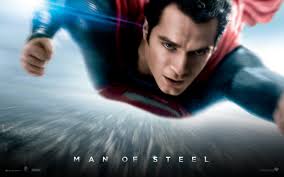
MAN OF STEEL REVIEW

We all expected  it rightly. Yes. There is the influence of Christopher Nolan's BATMAN trilogy on this movie. This installment is the darkest Superman film so far. This super hero is engraved as a troubled soul who is made to believe(along with the audience) that the world is not yet ready for him. And then its all about how he comes to terms with the nature of humans and his soul searching.

The beginning of the film is elaborate, exploring Krypton and explaining how the alien child landed on earth and what he is expected to do here on earth. The Krypton part is well imagined and portrayed. Zack Snyder, who became obsessed with creating wildly creative and dreamily realistic time and space in his "Sucker Punch" took care here that its not all about the astonishing bewilderment that the visuals generate but about the proceedings that the audience could relate to. After the child lands on earth, the film cleverly chooses a jumbled screenplay that allowed the film to take its own time to explain what it got to. Because they chose to explain not how he became Superman but about why he remained a man.

This film follows the trend of the new age superhero movies that believe the "MAN" inside the superhero is who drives the alter ego. Batman and Iron man managed to mix the genre thrills with the core-human aspect. The batman trilogy dared to get as dark as it can get, to portray what "Being a batman" is. Being a batman, he has the limitations of a human, he has to deal with villains who have extremist evil ways but are humans at the end of the day. That allowed the three films to let their action episodes take place in a visually comprehensible time and space continuum. As per that template, "Being a superman" begs for a larger world, villains with superpowers, and spectacular visual effects that need to be complex enough to convince you that beyond a point you dont need to follow the action exactly as you are not expected to. Anyways, they are way faster and smarter than we can observe. Thats why when special effects throw away the people from the screen, you dont complain much. But for how long? What about the little Superman-pleasures?

While I was watching the film, I had a small question lingering in my mind. When Superman doesn't enjoy being himself, how can we like him? I dont mean that the character is not fully developed but my question is "Is it too much if we ask for a little humour?" Henry Cavill is always with stiff lips and serious expressions. I personally, expected at least some romance between Superman and Lois Lane. If you were to remind me of their smooch, for your information, I wouldn't call that romance.

Well.This film has all the ingredients it got to have. Spectacular action episodes(though slightly prolonged), music that upholds the hype of the visual, fine performances, and averagely written dialogue.

As a final say, this is not on par with "THE DARK KNIGHT" but entertaining in its own way. I enjoyed it.

Thursday, 14 February 2013

DEATH AND ITS REVELATIONS

The most certain thing in this world is death. And the most uncertain is life.- Swaroop

Two days back, I received a call from my home that my Granny is struggling with life and the doctors are not giving any assurance. She is around 90 years old, and now a days where crossing 70s has become quite a miracle for a man, her death cannot be termed as untimely. I didn't even switch off the TV and am certain that she would recover, as it happened many times to her. In the next five minutes I got another call that she has passed away.My mother was crying over the phone and strangely I could sense a gloom surrounding me. As far as I know, I am the psychologically strongest person I ever know. Ever since I have decided to prefer looking at things from a pure logical perspective to an emotionally attached manner, I have found death and life quite alike in the manner they amuse me. Infact death is a bigger joke than life. I have read a story somewhere where a son asks father whether he would cry if he dies, the father replies "Death is a liberation. Why cry?" I cant argue against that statement, not because I am a pessimist but because I believe that death is what makes life complete. Having such an ideology, I found it strange finding myself being stricken with grief over the news of death of an old woman. My mind began to ponder over the innumerable questions popping up. We all know that death is certain. But why do we term it as a tragedy?

Imagine that a doctor has told you that you have cancer. That very second, the whole world surrounding you begins to look different. Your definitions of life and happiness will change, the way you talk and treat will change, the way you enjoy things change. The way you enjoy life will undergo a complete reformation. We all enjoy the luxury of not knowing when we die, and thats what makes us free from the fear of death. Lets say, you know the date of your death. Even if it is 120 years away from today, you cant help but begin to count days. Even if you drink a glass of water, you will begin to enjoy every drop of it, as you feel that you cannot drink even a single drop once your life ends. But in our every day life, we do never value the little pleasures of life as we take them for granted. We unconsciously think that we live forever, and are blinded to the pleasures that accompany by "savoring" each minute of life.  So what is it that has made your glass of water enjoyable? Is it your life that you assume as unending or the death that makes you value the little things of life? That is the reason I say death is what makes life complete. Death is the boon that we all are given to enjoy the greater boon of life. because only when death comes into picture, you begin to value your life. The fact that it has an end, creates the inevitable feelings associated with it.

While there are people who are on bed for years, longing to die but cannot, people who are struggling with their health but couldn't eat a single piece of idli, people who are going through pain each and every second of their life, for whom even watching the sun set is a luxury, we normal people in our everyday life are passing hundreds of sunsets without realizing the beauty of it, eating quintals of food, without the awareness of what a blessing it is, spending days and years of life without acknowledging the value of it. Because we look at death like a distant stranger always far away. But the truth is that death sits right beside you every second of your life. Death travels on every vehicle on the road, death is dancing on every top floor, in every electric device, in every chemical and in every atom of the universe. Such delicate is life. The fragile web of happiness surrounds you, and you dont kow when it collapses. "Life is short" is a statement often heard. but no. Life is long. Death is short. it would not give you the time to rewind all the pleasant moments of your life before passing away. It would come simply like a whirlwind.

Living long enough doesnt make it a good life. You would not be there after you die to count how many years you have lived. Once you die its all the same whether you have lived for 10 days or 100 years. The people you leave behind , may inherit your wealth or curse you for the sebts you have passed to them but they are of no meaning to you because that "you" caeses to exist once your chapter completes. What difference does it make to you? You wont be there to see or feel it. Its unimaginable to imagine that you dont exist. The world after you or the world before you fade into utter insignificance in the light of the fact that its only the present that is in your control, atleast partially.

Now I am understanding the gloom surrounding me. Death is inevitable for everyone. It is something you cant escape, whatever you do. Thats why we all can relate to it. Let me savor each moment of my life. Let me enjoy every glass of water, every drop of dew, every word I hear, every place I visit. The world has nothing in it to be termed as beautiful. But "it all can vanish and never return" is what makes you look at it with reverence.

Enjoy each moment to its fullest. Life is temporary

--Swaroop

Monday, 28 January 2013

Viswaroopam review


The mind set of terrorists has even today remained a puzzle for most of the part. Because they never volunteer to psychoanalysis, to study and analyse their way of thoughts and ideology is a task yet to be achieved. Though we don't understand them, we have to bear them. To say that terrorism is a global problem is quite an understatement. An issue that has been redrawing global relationships and influencing things ranging from political ideologies to peace of mind. It is very easy to make a terrorist a villain in a movie, but its quite difficult to develop the character. "Dont they feel a pinch pity, for the people they murder mercilessly? Do they really believe that Allah will reward them for killing innocents?" are the kind of unanswered questions that make the common man confused and angry. When I heard that Kamal Haasan is making a film about terrorism, I am more than eager to witness in which light is he showing them. Because so far in Indian cinema, terrorists are portrayed as nothing more than blood lusty goondas and sometimes even like psychopaths. It is important to relise that terrorists are not psychopaths. They are very sane, but are convicted by a belief system that mekes them think that what they do is for the good of the world and God. In their perspective, they are the fighters for a greater good. Kamal haasan seems to have understood this basic point very clearly.
Viswaroopam is a technically brilliant and conceptually sensible film made by a man who understands what he is saying and who knows the depth of the characters he is portraying. But it cant help itself pull out of its imperfections. The film takes you to Afghanistan, introduces you to hard core Jihadis, takes you inside their homes, and lets you listen to their family conversations. The film starts with Kamal entering the bloodshed world of terror as a new Jihadi. It very much triggers our curiosity to know about the kind of life they lead, and the film doesnt disappoint you there. As the film progresses, it shows Kamal slowly getting deeper into the world of Jihad, but you never really believe that he is really into the ideology of it. When Kamal says to the head of the Talibans "Jihadis like us should shed blood, not tears", he says it with such a blank face that it makes you wonder what he has inside his head. And eventually, it turns out that Kamal is not a terrorist, but a soldier undercover sent to Afghan as a wolf among sheep. This is the major twist in the story and the same is the pitfall. Why?

Because our curiosity to listen to how a Jihadi supports his ideology and how he justifies the blood he sheds and how he convinces his conscience is half satisfied. The way the terrorists are portrayed as people having normal emotions but are misled by some blind religious intolerance, doesnt allow this film to be a basic Good vs evil flick. Eventually, it should turn out to be an intelligent discussion dealt with sensibility. As the realistic depiction of the characters hints the film's belief in the fact that "Good and Bad is a matter of perspective", the ride should be fuelled by the clash of ideologies. But here the ideologies and the opinions of the main cast never enter the front stage. The problems and tragedies of terrorism are widely well known to people. And when a film makes terrorism as its subject, it makes an adrenaline rushing edge of the seat taking an inevitable ingredient. That requires a racy screenplay, emotionally captivating character conversations. The film falters with this.

In Christopher Nolan's "Batman Begins", when Bruce Wayne disagrees to execute punishment, the conflict of opinion between Bruce Wayne and Ras Al Ghul( a terrorist leader) creates an interesting watch and that gave the film an emotional content that we can relate to. Viswaroopam's sole and biggest mistake is the lack of that. Kamal's research is evident from the way the Afghan village is recreated and the family scenes are shot, but the conflict of opinions never materialised. The terrorists do their work, and the police do theirs. To compromise that this film is merely a thriller but not a penetration into emotions, the obvious question would be to ask why much time is spent in Afghan. The film's confusion of its genre is  the major drawback. The fil tries to evoke sympathy towards the terror striken Afghan but is partially successful. It tries to twist your nerves with thrill, but lags far behind 'interesting'

That being said, this is not a bad film. This is a good attempt by a rare talent but a little more care would have done wonders.

Bottom line:- Watching once doesnt make a heavy loss

Friday, 23 November 2012

DAMARUKAM REVIEW

My friends who follow my reviews in my blog always have a compliant against me. They say that I watch movies in a hollywood hangover, and hence I do not appreciate any telugu film. "You can't compare every movie with GODFATHER and DARK KNIGHT. "  they say. So the point is that I have to review a telugu film, within the standards of this industry. Let's try.

Andhakasura is the lone survivor from the clan of Rakshasas, who is burning with vengeance towards the 'Devathas" who made them extinct. He is waiting for an opportune moment to come back and gain control over the "Pancha bhootas". Anushka is the child who is born with the blessings of Parvathi devi, but the astrologers foresee a potential danger from evil forces to her in future. Nagarjuna is the chosen one who is born to save the world. He is a born devotee of Lord Shiva but turns a cold hater afterwards when his family is brutally killed by a monster and he doesnt see Shiva to come to the rescue. As the time is ripe for Andhaka's end, Shiva manifests in human form and comes to live with Nagarjuna. I wont spoil the fun for you if you want to watch the movie. The rest of the movie is about the game between Andhaka and Shiva but through Nagarjuna.

The above story sounds fascinating enough to transport you into a world of fantasy and wild imagination, and also provides a strong platform for the director to carve out solid and connecting characterisations and delve deeper into philosophical zones. This is more than an opportunity. A devotee turning into a hater and the God coming down to help him are themselves the points that can be a subject for an emotional experience. But sadly they are left unexplored. In the begining of the movie, when the voiceover and visuals show the end of the Rakshasa era, we identify the point behind the villan's burning longing for vengeance. But that is not taken to the next level, as we never get to see what he wants to do by gaining control over the five forces of nature. He just looks like another character who has his own set of plans.

The major flaw is the screenplay. After the tone of the story is set and we all are ready for thrills, the director throws comedy tracks at us, that do nothing better than watering down the pace. There the film had its first speed breaker. And then it struggles a lot to pick up again. Nagarjuna's  smiles, dialogues and fights ooze their magic, but that works only when backed by a  tighter screenplay. He is made doing the same thing many times that has made the editor's work harder. Till the interval block, the emphasis is on the bonds formed between Nagarjuna Anushka and Prakash Raj. Among these, Nagarjuna and Prakash raj's track tempts you to expect that their contrasting views on God and his purpose will provide a sub plot, but will disappoint you. We all know that at some point, Nagarjuna will realise that the person behind his family's tragic death is not Shiva. But that realisation is placed at the climax, and it comes as a part of a song. This is just a plot device to lead Nagarjuna to the climax fight but doesnt have the required philosophical depth it required. You may argue with me that this kind of fantasy flicks do not need to show spiritual realisations, but by merely knowing that Andhaka is the person who killed his family cannot turn Nagarjuna into a devotee. It is enough to turn him against the villan. But to re-turn Nagarjuna towards Shiva, a bigger answer is necessary that explains why all this family tragedy and his turning away from Shiva helped the bigger scheme of things, and how they all fit into an essential and purposeful destiny. Thats why when Shiva heals the hero's sister, you dont feel anything and will wonder why he didnt do that till then. Ofcourse that would have made this into a great film but those  untouched doesnt leave this as a bad film either. The only disappointment is that in stead of wasting a lot of time on useless comedy tracks, the film should have bent towards this.

"Dear Swaroop, This is just a popcorn movie. You are complaining too much" may be your answer. But if you come out of the theatre feeling that something is missing, this is it.

And the computer graphics. Much has been said about them, but they are just okay. Especially the climax fight reminds you of video games. When Jeeva says to Andhakasura "You won the first level" you wish there were Vithalacharya kind of obstacles in hero's way to the villan so that it could be fun watch him rise and fall through his way. But you are too much of a customer. The climax is all about a fight and head slicing. Thats it.

And Nagarjuna is fabulous. His perfect body, his smiles, dialogues, walking style, his chemistry with Anushka are top notch. You can watch this just for him.


Wednesday, 17 October 2012

CAMERAMAN GANGA THO RAMBABU REVIEW

Let me clear you something first. If you think that this film is about media and its role in society, you are wrong. Or you may hav thought that this film is about some Ganga and Rambabu. Nope. You cannot see much of Ganga in this film and you don;t bother about it. (Lets come to that later). This film is all about Pawan Kalyan and Pawan Kalyan.
Rambabu is a macho guy, who doesn't bother even to travel places to beat people who are unlucky enough to get their names on TV and newspapers for wrong doing. Wait...He stops you somewhere by the road and ask you what you do for a living. If you say "Nothing....chaltaa", boy you are done. He will beat you to pulp. Of all the super human abilities he has, the greatest one is to bear "Over acting". Thats why when Tamanna overacts all through this film, he silently bears and even smiles but never complains. Wish we all had that patience. Now to the story. After coming to know what a gutsy man Rambabu is, a channel offers him job. And there too he does the same. This time instead of beating normal brats, he beats politicians, Ex-CM etc. He rises to a star status in the state, because when the police are too lazy to arrest a murderer politician, he does it( The police's excuse is that they are not daring enough to do it). And as part of the script the politician should plan Rambabu's murder and he obeys. Yes he is the villan. While the first half of the film is proceeding, you want to give pawan Kalyan an idea. If he so much likes to use his punch power and karate skills, it would be better if he can join the police. The police in this film seem to be dying waiting for such a gutsy hero. What is the use of mike in his hand and camera behind him, when he wants to beat the evil out of everyone? There are very few scenes in this film where his brain functions like that of a journalist. Rambabu doesn't have a journalist inside him. He is the typical telugu cinema hero, who just cannot see injustice going on infront of him. Again to the story, he gets fired from the channel for being too aggressive. And then we come to see a stupid and brain less villan. Prakash Raj is such a headless chicken that when he murders his dad, he does it as if he is scratching his back. It gets recorded by his driver. And he takes the most foolish decisions at the most crucial situations in his life. Ex:- Murdering a journalist in a democratic country like India and expecting that the journalists would fear him thereafter. Ha ha ha.....Puri Jagannath seems to be obsessed with gangster flicks that he ripped off a gangster villan and placed him in a politician seat. Too illogical. The rest of the story is about how Rababu stopped this Satan from becoming the CM.
The only scene where Rambabu seems to have achieved something through media is the scene where he confronts Prakash Raj about "Telugu Udyamam" Its good. He talks sense there. And it worked actually. This is one of the few scenes where the wits of Puri set the fire on screen. but to come to such a point, Puri spends too much time dragging and its almost one and half hour by then. Too much pressure has been on Pawan Kalyan to make this film impressive. His star power comes to save at lots of places but it is brightly evident. As the film nears the climax, the entire point of media takes a back seat and Pawan Kalyan's ideology is highlighted. This scene would make his fans go crazy. Much has been done in this movie targetting his fans. Even the CM says that he is Rambabu's fan, and its all whistles in the theatre. A lot of cinematic liberties are taken all through the movie that we wish it had a tighter screenplay to make them invisible. Puri Jagannath seems to have forgotten the word screenplay long back.

The climax is well done. Its where Puri gives a kick to all Pawan devotees. Pawan Kalyan has never before been glorified like this on screen. I liked Gabbar Singh because it is a film which considers its only business is to reveal, mystify, glorify and squeeze the image of Pawan Kalyan. The charismatic character that is created in that film can get away doing anything because we allow him to do anything to entertain us. Thats why even if he treats his policemen as slaves, we laughed but never complained.  This is primarily because the film doesn't intend to take itself too serious. But "Rambabu" is not like that. It comes up with some social message but neglects its own loop holes in the plot. It takes itself serious, and then we obviously ask logical questions. This film claims that itself is not a song dance routine, but it does discuss serious problems in the society. Then why the characters are far from reality? Why a cardboard villan? Why mockery of itself? 

And then about Pawan Kalyan. If there is an actor in this industry who has the most genuine and the most cut throat following, its undeniably Pawan Kalyan. He is the best of all when it comes to oozing charm all over. He rocks the screen with his bare presence, talks fire, fights the hell and appears sincere in whatever he does. Its solely for him that you can watch it once.

Rambabu doesnt discuss about media and its role, it doesnt mess with intelligent questions, Its not a shankar's kind of film that discusses contemporary problems. The issues that it addresses are vague. The message it delivers is simple. Repair yourself. The country gets repaired. The film is a show of Pawan Kalyan's offscreen persona. You will not feel sorry for watching it, but you dont miss anything if you miss this.  A tighter screenplay and an intelligent characterisation would have made this a good watch. Pawanists may like it due to glorification of their hero's image and his speeches. But if you expect something sensible and engaging, its your wish if you want to watch it.

As a final say, its FANS THO PAWAN KALYAN

PS:- As a Pawan fan, I enjoyed watching him talking, walking, dancing and fighting. But the reason I am disappointed is that there is nothing more than that. Puri is the culprit. I am interested to see how general audience and critics would respond to this film. Lets wait!!!!!!

PS 2:- Shame on Manisharma. The background score is directly lifted from THe Dark Knight Rises.

BROTHERS REVIEW (MATRRANN)


K.V.Anand's films always hold a surprise somewhere. In every movie of his (Veedokkade, Rangam, Brothers), there would be some character that misleads you into believing that it is good. In Veedokkade, its the hero's friend, in Rangam, its the CM guy, and here its the Russian lady. (She makes you think she is the potential villan, but turns out to be a do-gooder) . And this time, the film is misleading as well. When you are told that a film is about conjoined twins, you expect the story revolving around their emotions or atleast to throw light into their inner selves. But what you get is a scientific thriller. I am not disappointed with it, but to say.

Sachin Khedekar plays a scientist whose experiment to create a superhuman misfires into conjoined twins(The heroes ofcourse). He struggles to get recognition as a successful genetic Engineer, but ends up as a businessman, whose product "Energion" claims to bring instant growth in children. His product becomes a big success and everyone is happy along with the twins. His two sons, though twins have nothing in common except looks. One is a shy introvert and decent guy, while the other is a fun freak. (We agree that it is the norm that the twins should be radically different otherwise there is no point of a double role!). okay, so they love the same girl, and because they love each other too, one of them should sacrifice. And then the story takes some interesting twists and turns. Something is wrong with Energion. It is revealed in the first half itself that Sachin Khadekar is the culprit and he knows that his product could erase an entire generation. If there is something else to be revealed that could thrill us or shock us, this movie could have become a very good film to watch. But thats the end of the game, and the end of life for one of the twins. The dead guy knows everything, tells us everything and passes away, leaving the rest of the screenplay to get restricted to a semi-boring second half.

For a film that aims to be an entertaining scientific thriller without so much of visual thrills, it is bound to depend on a screenplay packaged with twists and turns that are unexpected. It should hold your interest till the end, and you should be bothered with a lot of questions and you should enjoy being bothered. But what mistake the film does is that it reveals the most riveting twist in the first half itself, crippling the screenplay in the second half. For a film to emotionally connect with the audience, it should have fully developed characters. The behavioral traits of the twins are shown but the characters are poorly explored. This is a film where a havoc is caused by one man, just because of his pure love of science and disregard to human emotions. it obviously is visible that the character of villan is as much important as the hero. But where do we see what his thoughts are about? Where do we see him taking a vow to kick the world's ass for ignoring him? In the climax, he bursts out that no one cared for him as long as he tried to get a break as a scientist, and thats why he turned the society around him as his research lab. Good. But merely by uttering those words he cannot make us feel sympathetic towards him or gnash our teeth against him. Because we do not get a chance to travel along with him, to see him fall and rise. Remember the "Doc Oc" in Spiderman 2? We get to see how he started with a noble cause, how and why he lost control and how he turned a monster. That made him the most menacing villan, and hence endeared spidey to us. For a plotline that depends on the villan as much on the hero, its a blunder that villan's character is left unexplored. In that case the havoc he causes, should provide the visual thrills for us to get engaged. But that too doesnt happen as it is a medical scam. Even the unveiling of the mystery didnt help, as the plot ran out of surprises post the interval. Thats why whatever is revealed in the second half , fails to connect with the audience. The shock factor missing in the second half, worsens it further.

The reason I took much space to point out what the film lacks, is because I liked to like it. It is a potentially entertaining film, that missed the target due to simple mistakes. Picking up a line like this for a film is a commendable attempt. But the execution is where it has gone wrong. The film has that endearing factor that makes us overlook all the cinematic liberties it takes, but the faulty screenplay irritates you and makes you turn towards them. This is not a bad film. We cannot miss to mention the technical finese with which K.V. makes his films. The way he mixes entertainment with out of the box story lines is remarkable. But when a movie fails, its obvious that we talk more about why it failed than about whats good in it. Isn't it?

As a final say, it doesnt make you regret watching it.
PS 2:- Surya's previous flick "7th Sense" made me think twice before deciding to watch this movie. "7th Sense" is such a crap that it made me laugh at all its serious moments and cry at all its jokes. Compared to that disaster, this is way better.

Thursday, 11 October 2012

STARBUCK

Note to my regular visitors:- This article is written for a special purpose. My regular blog visitors may wonder why I am talking about some french movie. And you can understand this review only if you watch the film. This is not my regular article, and you are welcome if you want to give it a shot though. --Swaroop

The kind of planet we are living on, challenges your decision to be a father. Because its we who are bringing into existence, a living being and hence the reason in the first place, for all the sweat and tears it sheds. And if our children are optimistic enough to consider this life a gift, they would love us and be thankful to us. When the hero in this film finds out that one of his sons is seriously disabled, we can see a set of questions in his face along with a pinch of guilt and helplessness. "Is it me who is responsible for his condition? I can do nothing to revert this." may be what he says to himself when we can see a bitter expression in his face.Given supernatural powers, he would heal him then and there and would hug him warmly. But as a mortal, he is not left with any choice but to stare like that. When he himself is struggling with his life, he came across people who came into this world because of him, and facing the same reality. How do their failures ans successes affect him as if they are his? Why can't he abstain himself from meeting them? "Starbuck" is a film that toys with the above kind of ideas but not as seriously as I presented them in this article, but uses comedy as a vehicle to carry all the burden.

David Wozniak is a not-so-lucky guy who is indebted to people who drown you in your bath tub to say hello. And he has a girlfriend who is highly and deeply disappointed with him. His life, defined and destined to be inside the family butcher business is sapless and messed up, to cut short a long story. And the most interesting thing is that some twenty years ago he "donated" sperm that resulted in hundreds of successful pregnancies. To his dismay, all those "children"(now twenty-somethings) sue him to reveal his true identity. They want to know who their biological father is, but it makes David restless as he doesn't want to get public. But he gets the photographs and addresses of his children and decides them to visit them as a stranger.

We can see flashes of happiness in him when his son rocks the soccer court, a father's concern when he visits his daughter, and the funnier scene is where he follows his son who kisses his boyfriend on his lips! The scenes where he helps them as a complete stranger are so sweet, but they are to be followed by sweeter ones towards the climax. Its surprising to ourselves that even when the film refuses to let go even one opportunity to get melodramatic, we find it still sweet and loving. (The peak point of sentiment is the group hug scene in the climax but it will not let you take your eyes off the screen as its simply beautiful). The courtroom scenes doesn't get tempted to discuss David's choice to remain anonymous and it helped the film a lot from getting serious. Because a film that starts on this kind of a plot has the danger of becoming a laughing stock if it takes itself too serious. The film rightly sails on wit and humor.

Paternity or fatherhood is not just a relation or responsibility but comes as a package of many feelings and emotions. Psychology says that parents see their children as an extension of themselves and hence the showering of love. May be true but sometimes they get partial towards the "extensions" and thats where we get to see fathers taking bullets for their daughters and mothers cutting the bread into two for their two children and she is OK with a glass of water. Of course this film doesnt crave for this level of melodrama, but all the feelings flow as tangents to the story. It is obviously implied that the new people in his life, and the experiences he went through have made him a better person. May be through helping them and being with them, he learnt how to help himself and start life again. "Simple emotions kept simple" is the principle it follows. Its amazing how film makers often miss this simple logic.

The film has its own share of flaws like "All-positive" characterization, tilting towards melodrama a bit more than enough etc. But what makes you overlook those is the sweetness it offers, the wit with which it presents itself and good acting. The magic is that the film, throughout its length, seems to be grazing on the surface but when we finish watching, we realize that it has transcended the deepest depths it can. But as said before, its a bit thicker coating of goodness.  All the characters are as good as they can be, and that would make the critics sharpen their pencils perhaps. But lets analyse the film on what it is, rather than on what it can be.   It aimed to stream through cute moments, warm hugs and simple guitar music, and that doesn't bother you much. I am waiting for the English version of the film, as I didn't understand most of the dialogues in this French language. Despite language being a barrier, I enjoyed this movie.

P.S:- The scene where David sees his new born child summarizes what this film intends to show from his inside, but that scene cannot be described. Its to be watched. May be thats what film making is about!

Saturday, 15 September 2012

LIFE IS BEAUTIFUL REVIEW


       A director makes only one film in his life.    Then he breaks it into pieces and makes it again.-   Jean Renoir
"Growing up " is the stage in life that has its own contents of excitements. Not always pleasant and positive, but life does throw at you whatever it can. Sometimes you find it interesting, sometimes you wonder why the hell is it happening to you. To hear and digest that your mother has cancer is not easy. But that may bring a lot of changes to your attitude, your way of life, and your relationship with your family and the people around you. All the things that come across in your life seem to have a purpose behind them, if you wish to agree with the fact. Life is beautiful when you have dinner(made by your mother) with your family, when you fight with your sister, when you go out playing cricket with your friends, when your "dil ki dhadkan" proposes you. But when things alter and you find yourself out of the comfort zone, where there are adjustments, sacrifices, responsibilities and situations where you can do nothing but hope for good....then can you say that "Life is beautiful"? Sekhar Kammula's latest film is about the above, but not entirely.


The film starts with Amala insisting her kids to leave her and move to Hyd.(If you watch a lot of Telugu movies, you can guess that she has some cancer). So, our hero and his two sisters move from their city to the world of Sekhar Kammula, where there are meek middle class people and proud rich people. The rest of the film is about the teenage infatuations, friendships, relationships, hardships, girls dancing in rain, and all other typical Sekhar Kammula stuff. The film is about a bunch of youngsters who live in a colony called "Sunshine colony"(To remind you that it is a happy place). I dont need them to introduce to you if you have seen Happy days.  They are cloned from there. Welcome to the happy happy world of Sekhar Kammula where middle class people are sensible, know the meaning of life, friendship and stuff, whereas the rich are always evil minded, corrupt, deceptive, manipulative and ruthless. They are always seen calling the "poor" guys "B-Phase dogs". That comes a million times. And the rich people in this film seem to have High BP, piles and alarming levels of short temper that makes you pity them most of the time. "Oh Sekhar......we understood that you hate the rich. But you are spoiling your own film with your prejudice". Those characters just look like vessels that carry bad, but never look human. We all know that there is no black and white in this world. Everything is gray. Thats why it seems as if Sekhar has taken his audience for granted. Keeping in mind the amount of maturity the director has displayed in his previous films, its hard to believe that this kind of characterisation came out of Sekhar's mind. And then there is Anjala Javeri who dances whenever it rains and makes expressions as if she had never seen it raining in her life. And there are always a lot of fights between the good(innocent middle class) and the bad(spoilt rich guys). There is a guy who loves a woman(Shriya) older than him, who is a computer geek, who is weak and intelligent. Does it remind you of "Tyson" in Happy Days? Its not your mistake. Oh yes...Shriya has a boyfriend who is so possessive of her. By this time you are completely convinced that this is a remake of Happy Days.

Sekhar started this movie with a noble intention to convey his version of optimism and his nostalgia. But he chose an easy way of doing this by trying to fit this into the template of his previous flick "Happy Days". The film assumes to be the journey of a youngster who suddenly falls out of his comfort zone and has to face the reality of life.(But this "reality" is Sekhar's fantasy after all). He isn't completely mature but has to act mature. He comes across a lot of things like teenage infatuations, ego clashes, aims, responsibilities and of-course love, which will not let him roam above those but pull him to their level and demand a decision from him. And there are several parallel threads in the film that too are dealt with care.( Nag raj-Lakshmi track is quite entertaining.) The film would have been refreshing if the director had chosen to stay true to the concept. But what bothers you is the artificiality that pops up uncomfortably in the film.  Shriya's story almost looks like a fairy tale.  Some of the characters in the film look too scripted and lack an appeal of reality. Do the rich always try to make fun of the poor? I don't think so. And there are cliches that are thrown disgustingly. When Shriya gets out of her car and boards the van of our heroes, you are forced to agree that the good always receive good. Too cinematic to be a Sekhar's film. Sekhar's world has always its share of optimism and positivity. In any other film of his, you can see it glaringly evident. But what saved them from being preachy and boring is their realistic and simplistic portrayal, equipped with down to earth dialogue that made it believable. But here, he too has traded off art for drama. He just sliced off his characters from Happy Days and stitched them here and wanted us to believe its a new film. It seems he planned the begining and the climax and filled the rest of the movie with "his" regular stuff. Not a very good idea Sekhar.

That being said, this is not a bad film. Its worth watching especially for the way the sentiment is worked out. No dramatic dialogues, no melodramatic music...simply as in real world. The Amala track moves you. You cant disagree when the hero says that his mother's cancer and the consequences changed his attitude towards his life. Thats what the film is supposed to portray, but somehow missed its target. The rest of the film wont make you glued to your seat, but it doesnt mean that it makes you fret with boredom. The only problem is that it gives you a feel that you have seen every scene before. You can guess everything. In that case the unfolding should be gripping enough. The film is partially successful in that department.The music is apt, but not haunting. The set is believable. The costumes are true to the characters. The actors  are fine. Kudos to Amala Akkineni. She excelled. The photography in the second half is brilliant. At the end of the movie, it says that All is well and life is beautiful. That seems to be the opinion of Sekhar Kammula. Is it? What is life.....depends on how you view it. And that forms a different philosophical discussion. Let it not be here in this review of this simple film. we can do it somewhere else. 

As a final say, its not great, but not bad. We like you Sekhar for your storytelling. But please tell us a different story each time.

PS:- Anjala Javeri is still stiff and beautiful. Shriya looked gorgeous. It seems Sekhar too is becoming conscious of the fact that girls can be exploited with camera without looking vulgar. I liked Shriya's two big...................................................................................................................eyes. Really yaar. You spoilt mind. I know what you thought. I am not like you. A good boy.

PS 2:- When the scene in which Mahesh Babu appears came, the audience expected the next photo to be Pawan Kalyan's. They began shouting "Power star Power star". But the scene ended with the hero's photo and Pawan kalyan's fans seemed to be disappointed.